Public Speaking Games for Kids That Make Speaking Fun
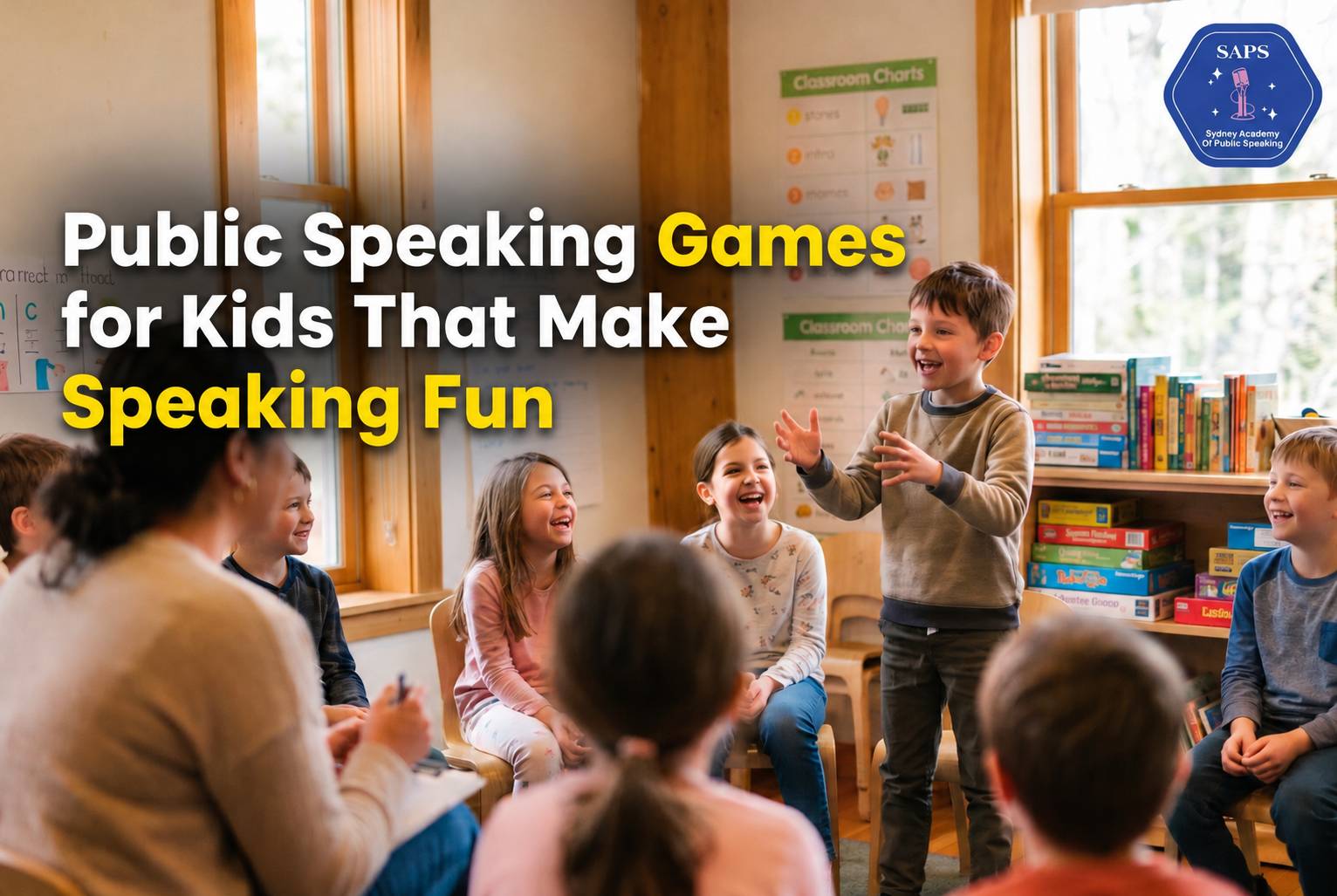
Using fun public speaking games designed for children in order to practice communication skills allows kids to feel less tense about their training sessions. Being involved in different activities such as word challenges, listening tasks, and creative acting helps children shape their skills in terms of expressing themselves, reacting quickly to things and communicating with the audience. These games can be used by various age groups and are perfect for kids who want to play alone, with friends or at school. Besides, they are beneficial for the development of skills, which help in particular with getting better skills in public speaking.
Summary
- Public speaking games help children practise communication in a relaxed, engaging way.
- Try word association, question challenges, character switches, storytelling twists and persuasive games to develop quick thinking, listening, creativity and confident expression.
- Start with simple games, adapt them to your child's age and focus on participation rather than perfect answers.
- The goal is to make speaking feel natural, enjoyable and useful beyond the stage.
Why Do Children Learn Public Speaking Better Through Games?
If you ask a kid to give a speech, chances are they will start questioning how they can write it, how long it should be and what if they mess up. However, putting it in a game format could totally change their attitude towards it.
This is the advantage of playful learning.
Games provide children with a chance to experiment with words, expressing their ideas, listening and responding to others without worrying about judgment regarding each sentence they say. Besides, they enable the introduction of crucial communication skills in small, easy-to-grasp portions.
At Sydney Academy of Public Speaking (SAPS), the concept of playful learning is implemented in the broader context of education. In a nutshell, public speaking for kids serves as a basic foundation for the child’s development of various skills like confidence, communication, creativity, teamwork, and leadership.
Here are 10 games parents and teachers can try to make speaking more enjoyable.
10 Public Speaking Games for Kids
Quick-thinking and conversation games
1. Word Association Chain
The first player provides a word, and the second player follows with the first related term that comes to mind. For instance: air, sky, aeroplane, trip, fun. The aim is to keep going without too much waiting.
What kids learn: Demonstrating fast-thinking skills, learning vocabulary and connecting ideas.
2. The Forbidden Word
Select an easy topic like school, holidays or favourite dishes. Give your youngster a minute to say something about it, avoiding a typical word related to the topic.
For instance, they can talk about a beach holiday but must not use the word "water" or "sand."
What kids learn: Versatile lexicon, also known as flexible vocabulary, ability to explain things clearly and self-confidence when some words cannot be used.
3. Question Ping-Pong
The game consists of two competitors who take turns asking questions. However, they cannot offer a one-word answer; their replies must be either an explanation or another question.
For example:
“What is your favourite subject?”
“It is science, since I love doing experiments. And what about you?”
What kids learn: Conversation technique, listening skills, and the ability to sustain the dialogue.
Creative expression and storytelling games
4. Explain It to an Alien
Imagine an alien lands on our planet and does not understand anything familiar. Ask your kid to talk about something simple, for example, a toothbrush, a school bus, or a birthday cake.
Your kid should explain what a toothbrush is, how it works, and why it is useful for us.
What kids learn: Clarity of communication, logical thinking, and the ability to explain the same idea in different ways.
5. Emoji Expression
Show your child a sequence of three emojis and ask them to create a short dialogue or situation around them. For example: a surprised face, a birthday cake and a dog.
They must bring the emojis to life using their voice, facial expressions and gestures.
What children learn: Voice modulation, tone, expression and body language.
6. Headline Remix
Provide your kid with a simple headline - for example, "Dog wins a contest". Then, your child's job is to create a captivating breaking news story. Your child can use a powerful opening sentence and tell the audience who the reporter is.
What kids learn: Imagination, storytelling skills, ability to attract the reader's attention.
Listening, persuasion and leadership games
7. The Audience Detective
Have your young one explain the same thing to three audiences: their younger brother/sister, a teacher or professor, and some friends.
Do you think they would use the same words and examples in all instances?
Work together to discuss how your child would adapt their explanation to different listeners.
What kids learn: Understanding the details of the audience, the art of adaptability, and being a smart communicator.
8. Switch the Perspective
Take any straightforward statement, for instance, "Having a pet is important for every kid." Get your kid to present their views on how much they agree. After this step, have them take the opposite side of this argument.
As you suggest this exercise, make sure children get a chance to think about the opposite belief before responding.
What kids learn: Effective thinking, expressing the opposing point of view in a respectful manner, listening skills, as well as having debating practice.
9. The 60-Second Salesperson
Provide your kid with a simple everyday item like a bottle, pencil or lunch box. Their task will be to convince you why that object is a great product in 60 seconds.
What kids learn: Speak persuasively, gain confidence, structure the message and present it in front of the audience.
10. The Question Master
Allow your kids to come up with a mini forum on their own. They will select the subject matter and invite family members to give their opinions and ask follow-up questions.
For example: "If you could change one thing about our locality, what could it be?"
What kids learn: Leadership, interrogative, listening and group discussion skills.
How Can Parents Make These Games More Effective?
The games that would be considered the most effective at teaching public speaking to kids are not necessarily the ones that have the most complex rules. Rather, what really matters is what the kids are feeling emotionally while playing them.
Start with games that correspond to your child’s interests and level of confidence. Younger or shyer kids may prefer games that have a shorter duration, while older ones would rather go through games that challenge them to use their debating, persuasion or spontaneous speaking skills.
And lastly, allow everyone to get their turn to speak, you included!
Do not interrupt every time the child makes a mistake. Give only constructive advice while at the same time encouraging the child, as it is more important than pointing out their errors.
When Can Structured Public Speaking Classes Help?
Playing games at home can be a useful tool for learning communication skills. However, children also need to talk with different people, engage in discussions, and benefit from mentors' guidance.
At SAPS, children learn these skills with the help of practical activities, presentations, storytelling sessions, debating and role-playing. The main goal is to teach kids how to become good communicators and express their thoughts and ideas.
Help Your Child Discover the Joy of Speaking
A child does not need a microphone or a stage to begin developing public speaking skills. Sometimes, all it takes is a playful question, a creative challenge or a conversation that encourages them to think differently.
With regular opportunities to participate, children can become more comfortable expressing themselves, sharing opinions and communicating with others.
At Sydney Academy of Public Speaking, this is the bigger purpose behind every speaking opportunity: helping children develop the confidence, creativity and communication skills to make their voices heard. With Term 4 enrolments still open, children across Sydney can join SAPS's age-based programs at five locations across five Sydney locations, such as Melonba, Quakers Hill, Ponds, Westmead and Marsden Park. So whether your child is naturally confident, still finding their voice, or somewhere in between, Term 4 is another opportunity to help them practise, participate and grow.
Because public speaking is just the beginning. The real goal is a child who believes their voice is worth hearing.
Explore SAPS's weekly term classes and holiday workshops, and discover how practical, engaging learning can help your child speak, think and grow with confidence.