
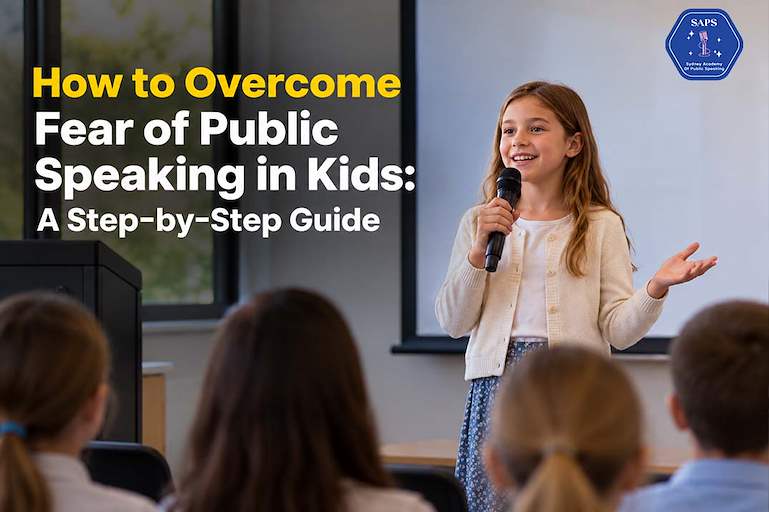
How to Overcome Fear of Public Speaking in Kids: A Step-by-Step Guide
Fear of public speaking in children can appear in different ways, from avoiding classroom presentations to struggling to speak when others are listening. The key is not to force children to become confident overnight, but to help them feel safe, prepared and comfortable expressing themselves. This guide explains how parents can understand their child’s fear, build confidence through small steps, practise everyday communication and celebrate progress without adding pressure. It also explores how supportive public speaking classes can help children develop communication, creative thinking, self-belief and leadership skills. Because overcoming fear is not about eliminating nervousness; it is about learning to speak despite it.
Summary
- To help children overcome the fear of public speaking, start by understanding what makes them nervous.
- Normalise their feelings, practise in comfortable settings, break speaking tasks into smaller steps and encourage progress rather than perfection.
- Storytelling, role play, short presentations and supportive group activities can gradually build confidence.
- The goal is not to make every child an extrovert, but to help them express themselves comfortably and believe their voice deserves to be heard.
Why Are Some Children Afraid of Public Speaking?
Your child might happily tell you an elaborate story at dinner, explain their favourite game in great detail or talk excitedly about something that happened at school. But ask them to stand in front of their classmates and deliver a presentation, and suddenly, they go quiet.
Why does this happen?
For some children, speaking in front of others creates a fear of making mistakes, forgetting their words or being laughed at. Others may feel uncomfortable being the centre of attention or struggle to organise their thoughts when everyone is watching.
Sometimes, the fear comes from a previous experience, such as being corrected in front of others or struggling during a school presentation.
The important thing to remember is that being afraid to speak does not mean a child has nothing to say. They may simply need more time, encouragement and opportunities to express themselves.
At Sydney Academy of Public Speaking (SAPS), public speaking is seen as more than delivering a speech. It is an opportunity for children to build confidence, communication, creativity and leadership skills that extend beyond the stage.
How to Overcome Fear of Public Speaking in Kids: 7 Steps for Parents
Step 1: Understand the Fear Before Trying to Fix It
Before giving your child advice, find out what makes speaking difficult for them.
Instead of saying, “There's nothing to be scared of,” try asking:
- “What worries you most about speaking in front of others?”
- “Are you worried about forgetting what to say?”
- “Would it feel easier if you practised with me first?”
Listen without interrupting or immediately offering solutions.
Your child might not have the words to explain their fear straight away, and that is okay. The aim is to help them feel understood rather than judged.
Once you understand what is bothering them, you can work on the specific challenge instead of treating every nervous moment as the same problem.
Step 2: Make Nervousness Feel Normal
Children can become even more anxious when they believe they are the only ones who feel nervous.
Explain that even experienced speakers can feel butterflies before speaking. Feeling nervous does not mean they are unprepared or incapable.
You could say, “It's okay to feel nervous. You don't have to feel completely confident to give something a try.”
Help them notice what happens when they feel anxious. Their heart might beat faster, their hands might feel sweaty, or they might struggle to find their words. These feelings can be uncomfortable, but they do not automatically mean something will go wrong.
Before a speaking activity, try taking three slow, comfortable breaths together. Keep it simple and reassuring rather than turning it into another task they must get right.
Step 3: Start Small and Build Gradually
One of the most useful ways to help children overcome fear of public speaking is to break the experience into manageable steps.
If speaking in front of a class feels overwhelming, don't make that the first challenge.
Start with a conversation with you. Then try speaking to a sibling, sharing a short story with the family or talking to a familiar friend. Once your child feels comfortable, introduce a slightly bigger audience or a more structured speaking activity.
Think of it as building a ladder, with each step offering a new opportunity to practise.
Try this: Ask your child to talk for 30 seconds about their favourite toy. A few days later, invite them to share the same story with another family member.
The aim is steady progress, not a race to the stage.
Step 4: Practise Speaking Without Making It Feel Like Homework
Children do not always need formal speeches to develop public speaking confidence. Everyday conversations can offer valuable practice.
Ask your child to describe their day, explain how to play a game, tell a story or share their opinion about something they enjoy.
You could also try a simple storytelling game: begin a story with one sentence and let your child decide what happens next.
These activities help children organise their thoughts, find words more easily and become comfortable speaking without memorising every sentence.
Over time, they also strengthen creative thinking and listening skills.
The key is to keep the experience enjoyable. If every conversation becomes a lesson in speaking correctly, children may begin to feel that they are constantly being evaluated.
Step 5: Help Them Prepare Without Over-Rehearsing
Preparation can reduce uncertainty, especially when a child is worried about forgetting what to say.
If they have a school presentation coming up, help them identify three main ideas they want to communicate. Encourage them to practise explaining each idea in their own words instead of memorising an entire script.
You can also practise the opening sentence together, as starting is often the hardest part.
Once they are comfortable, invite them to deliver the presentation to you without stopping each time they make a mistake.
Remind them that a pause is perfectly acceptable. If they forget a word, they can take a breath and continue.
A confident speaker is not someone who never makes mistakes. It is someone who learns how to keep going when things do not go exactly as planned.
Step 6: Celebrate Courage, Not Just Performance
Imagine your child finishes a presentation. They were nervous, paused several times and forgot one of their points, but they still completed it.
What do you focus on afterwards?
If the first response is a list of corrections, your child may feel that the effort was not enough.
Instead, acknowledge what they managed to do.
Try saying, “I know that felt difficult, but you stood up and shared your ideas. What part felt easiest to you?”
This recognises their effort while encouraging reflection.
As their confidence grows, you can introduce constructive feedback about voice clarity, body language or presentation structure. Keep it specific and manageable rather than correcting everything at once.
The objective is to help children see improvement as a process they can participate in, not a test they must pass.
Step 7: Give Them Opportunities to Speak With Others
Practising with a parent is an excellent starting point, but children also need opportunities to communicate with different people.
Group discussions, storytelling sessions, friendly debates and collaborative activities can help them learn to express opinions, listen to others and respond to different ideas.
A supportive environment matters here. Children should feel encouraged to participate without being embarrassed when they hesitate or make mistakes.
This is where structured public speaking classes can be helpful. With age-appropriate activities, guidance and regular opportunities to practise, children can gradually become more comfortable speaking beyond their familiar surroundings.
At SAPS, practical learning extends to storytelling, presentations, debate, group discussion, creative thinking and personality development. The aim is to help children build skills they can use in classrooms, friendships and everyday life.
What Should Parents Avoid When a Child Is Afraid to Speak?
Three common reactions can unintentionally add pressure.
Comparing them with other children: Saying “Your friend can do it, so why can't you?” can make speaking feel like a competition rather than a skill they can develop.
Forcing them into the spotlight: Unexpectedly asking a child to perform in front of others may increase their anxiety. Give them time to prepare and involve them in choosing the next challenge.
Speaking for them too quickly: When a child hesitates to answer a question, it can be tempting to step in. Whenever appropriate, allow them a little extra time to find their words.
Supporting a child does not mean removing every challenge. It means helping them approach challenges at a pace they can manage.
If the fear is intense, persistent or affects school participation and everyday activities, consider speaking with their teacher or a qualified health professional for additional support.
How Do You Know Your Child Is Becoming More Confident?
Progress does not always look like delivering a flawless speech.
You might notice your child volunteering an answer in class, introducing themselves to someone new, sharing an opinion at dinner or asking a question without needing your encouragement.
Perhaps they still feel nervous before a presentation, but they are more willing to try.
These small changes matter because confidence is not about becoming the loudest person in the room. It is about becoming more comfortable expressing yourself when you have something to say.
And that confidence can support children in far more situations than public speaking alone.
Help Your Child Find Their Voice
Learning how to overcome fear of public speaking in kids begins with patience, encouragement and opportunities to practise without the pressure to be perfect.
A short story at home, a conversation with a new friend or a presentation in a supportive classroom can each become a meaningful step towards greater confidence.
At Sydney Academy of Public Speaking, children are encouraged to speak, think creatively, participate in discussions and develop communication and leadership skills through practical, engaging learning experiences. With Term 4 enrolments now open, children across Sydney can join SAPS's age-based programs at five locations across five Sydney locations, such as Melonba, Quakers Hill, Ponds, Westmead and Marsden Park. So whether your child is naturally confident, still finding their voice, or somewhere in between, Term 4 is another opportunity to help them practise, participate and grow.
Public speaking is just the beginning. The real goal is a child who believes their voice is worth hearing.
Explore SAPS programs or book a free trial class to experience how supportive, activity-based learning can help your child find their voice.