
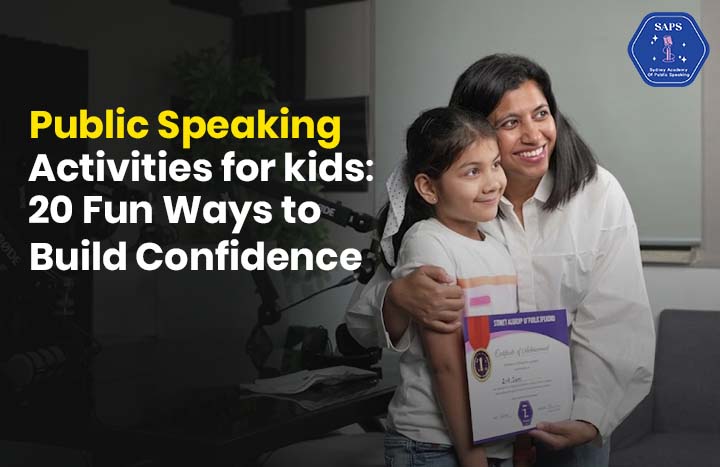
Public Speaking Activities for Kids: 20 Fun Ways to Build Confidence
Public speaking activities for kids can be much more than practising speeches or speaking on a stage. Through games, storytelling, role-play and everyday conversations, children can learn to express ideas, think creatively, listen actively and communicate with greater confidence. These activities help make speaking feel natural and enjoyable, whether a child is naturally outgoing or still finding their voice. This guide shares 20 practical exercises parents can try at home to develop communication, body language, spontaneous thinking and leadership skills. With regular practice and encouragement, small speaking moments can help children build confidence that extends far beyond the classroom.
Summary
- The best public speaking activities for kids make learning feel like play. Try one-minute talks, storytelling games, mystery objects, role-play, friendly debates and mini presentations.
- Keep activities age-appropriate, give children time to think and celebrate effort rather than perfection.
- The aim is to help children develop confidence, communication, creativity and leadership skills they can use in everyday life.
Public Speaking Is More Than Speaking on a Stage
Does your child have a story for every occasion but suddenly go quiet when someone asks them a question in class? Or perhaps they love sharing ideas at home but feel nervous when they have to speak in front of others.
These moments are more common than parents might think.
Public speaking for kids involves much more than delivering a prepared speech. Children use communication skills when introducing themselves, explaining an idea, participating in a group, asking questions and expressing their opinions.
At Sydney Academy of Public Speaking (SAPS), this broader approach is central to the learning experience. Its practical, activity-based programs combine public speaking with storytelling, creative thinking, debate, group discussion, confidence and personality development. The goal is to help children become confident communicators, not simply better performers.
So, how can parents begin at home? Start with activities that make children curious, encourage them to participate and give them the freedom to try.
20 Fun Public Speaking Activities for Kids
1. The One-Minute Talk
Ask your child to speak for one minute about something they love, whether it is their favourite game, animal, sport or book. Give them a few seconds to think before starting.
This helps children organise their thoughts and become comfortable speaking without a script. Take turns so they can see that adults practise too.
2. Storytelling With a Twist
Start a story with, “One morning, I discovered a tiny door behind my bookshelf…”
Let your child decide what happens next. Add unexpected twists to keep the story going. This activity develops storytelling, imagination and the ability to connect ideas in a clear sequence.
3. The Mystery Object Challenge
Place an everyday object in a bag and ask your child to describe it without naming it. They might explain its shape, purpose, texture or unusual features.
For an extra challenge, ask them to convince you that it is the most useful object in the house. This introduces descriptive and persuasive speaking.
4. Show and Tell
Let your child choose an object that means something to them. Ask them to explain what it is, why they chose it and what makes it special.
Show and tell is a useful starting point for children who feel nervous about formal presentations because they can speak about something familiar and meaningful.
5. Would You Rather?
Ask a playful question: “Would you rather explore outer space or the bottom of the ocean?”
The important part comes next: ask your child to explain why.
Encouraging children to support their opinions helps develop reasoning, clear expression and the confidence to share their point of view.
6. The Picture Story Game
Show your child a picture from a book, magazine or family photograph. Ask them to describe what is happening and imagine what might have happened before or afterwards.
This combines observation with creative thinking and gives children a starting point when they are unsure what to say.
7. Be the Teacher
Invite your child to teach you something they know well, such as how to play a game, draw a character or make their favourite snack.
Let them explain the steps in their own words. Teaching encourages children to organise information, speak clearly and recognise the value of their knowledge.
8. The Emotion Switch
Give your child a sentence such as, “I can't believe we won!”
Ask them to say it in different ways: excited, surprised, disappointed or confused.
This playful exercise introduces voice variation, facial expressions, tone and body language. Children begin to understand that how something is said can change how a message is received.
9. The No-Yes-or-No Game
Ask your child a series of simple questions, but they cannot answer using “yes” or “no”.
They must find another way to respond.
This encourages quick thinking, flexible language and spontaneous communication, useful skills when children need to answer unexpected questions.
10. The Family News Reporter
Ask your child to report on something that happened that day, just like a news presenter.
Encourage them to explain what happened, who was involved and why it was interesting. They could even interview another family member.
This activity develops sequencing, questioning, listening and the ability to share information clearly.
11. The Friendly Family Debate
Choose a light-hearted topic, such as “Should children choose their own bedtime on weekends?” Give your child a chance to explain their view.
Then ask them to consider the other side.
The purpose is not to win an argument. It is to practise giving reasons, listening respectfully and responding thoughtfully- foundational skills for debating and group discussions.
12. Role-Play Real-Life Situations
Pretend your child is meeting a new classmate, asking a teacher for help, ordering at a café or introducing a family member.
Take turns acting out each role.
These scenarios help children practise everyday communication in a familiar setting before encountering similar situations in real life.
13. The 30-Second Challenge
Give your child a random topic, such as “My dream holiday” or “An invention that would help the world”. Let them think for a few seconds, then speak for 30 seconds.
Keep the topics fun and increase the time only when they are ready. The activity helps children practise organising ideas and speaking without relying on memorised sentences.
14. Sell Me This!
Choose a household item, a pencil, cushion or spoon, and ask your child to persuade you to buy it. They must explain why it is useful, special or worth having.
This builds persuasive communication and creativity while showing children that presenting an idea can be engaging and entertaining.
15. The Compliment Circle
Invite family members to take turns sharing something they appreciate about one another. Encourage children to explain their compliments rather than simply naming a quality.
This activity builds positive communication, active listening and emotional awareness. It also gives children a supportive opportunity to speak in front of others.
16. The Interviewer
Let your child become a reporter and interview you about your childhood, favourite food, hobbies or funniest memory. Help them prepare three questions, listen to your answers and ask a follow-up question.
This teaches children that effective communication involves curiosity and listening—not just waiting for their turn to speak.
17. Describe It Without Naming It
Choose a familiar object, place or animal and describe it without saying its name. Your child has to guess what it is, then take a turn describing something for you.
This encourages precise vocabulary, clear explanations and creative ways to communicate an idea.
18. The Group Story
Gather two or more family members. One person begins a story with a sentence, and each person adds the next part.
Everyone must listen carefully so the story makes sense.
This builds teamwork, listening, adaptability and confidence in participating in a group, skills children can carry into classroom activities.
19. The Mini Presentation
Ask your child to prepare a two-minute presentation about something they care about, such as a favourite animal, a person they admire or a problem they would like to solve.
Encourage them to organise their talk around three main ideas rather than memorising every word. Afterwards, ask what they enjoyed and what they might try differently next time.
20. The Everyday Confidence Challenge
Give your child one small communication challenge to try during the week. They might introduce themselves to someone new, ask a question, share an opinion at dinner or explain an idea during a group activity.
Let them choose a challenge that feels achievable.
This helps connect speaking practice at home with real-world confidence, where communication matters most.
How Can Parents Make These Activities More Effective?
You do not need to complete all 20 activities in one week. Choose two or three that suit your child's interests and make them part of everyday life.
If your child is shy, begin with one-to-one games before introducing a larger audience. If they already enjoy speaking, add challenges that encourage clearer explanations, thoughtful listening or more spontaneous responses.
Most importantly, avoid correcting every mistake as it happens. Give your child time to finish, acknowledge what they did well and offer one manageable suggestion for next time.
Confidence grows when children feel safe enough to try, not when they feel pressured to perform.
When Can Public Speaking Classes Help?
Home activities provide a valuable foundation, but structured public speaking classes offer opportunities to practise with peers, participate in group activities and receive guidance in a supportive environment.
At SAPS, children learn through presentations, storytelling, impromptu speaking, role-play, debate and group discussions. This practical approach helps them develop communication alongside creativity, confidence and leadership
Help Your Child Find Their Voice
Every child has ideas worth sharing. Sometimes, they simply need more opportunities to discover how to express them.
A story at the dinner table, a friendly debate or a short presentation can become a small step towards greater confidence. Over time, these experiences can help children communicate more comfortably, participate more actively and approach new situations with greater self-belief.
At Sydney Academy of Public Speaking, the goal extends beyond teaching children how to speak in front of an audience. It is about helping them develop the confidence to express ideas, think creatively, listen to others and take on new opportunities. With Term 4 enrolments now open, children across Sydney can join SAPS's age-based programs at five locations across five Sydney locations, such as Melonba, Quakers Hill, Ponds, Westmead and Marsden Park. So whether your child is naturally confident, still finding their voice, or somewhere in between, Term 4 is another opportunity to help them practise, participate and grow.
Because public speaking is just the beginning. The real goal is a child who believes their voice is worth hearing.
Explore SAPS programs or book a free trial class to discover how practical, engaging learning can help your child find their voice.